Software development often begins with a grand vision – an ambitious product packed with features designed to delight users and solve complex problems. However, pursuing this vision all at once often leads to delays, scope creep, and failure. How do we get there more efficiently and reliably?
The iterative approach rejects the “big-bang” launch in favor of delivering working, shippable software every few weeks, creating a more complete and polished product with each cycle. Initial versions may be minimal, but they serve as a solid, tested foundation for rapid feedback and continuous improvement.
Why Iterations Matter
Software development is inherently complex. Using iterative cycles helps manage this complexity by providing structure, focus, and a framework for continuous learning.
Focus
- Tackle the endless list of technical challenges, complexity, and unknowns in manageable chunks.
- Address what matters right now, maximizing impact where it’s most needed.
- Avoid overthinking and over-engineering, keep the development process on track.
Learn and Adapt
- Verify assumptions (both technical and product-related) and quickly learn what works and what doesn’t.
- Minimize waste by presenting and releasing as early as possible to gather feedback from stakeholders and real customers (internal or early adopters). Avoid spending months on a feature that ultimately won’t be used due to incorrect initial assumptions about user needs.
Product Prioritization
Let’s imagine we want to build BambooBoost, a wellness tracking app for pandas in zoos. The grand vision includes monitoring health, mood, nap cycles, and bamboo consumption, processing data from various sensors (movement, heart rate, GPS, etc.), integrating with a web-based panda management system, real-time alerting, multiplatform access, and social media integration.
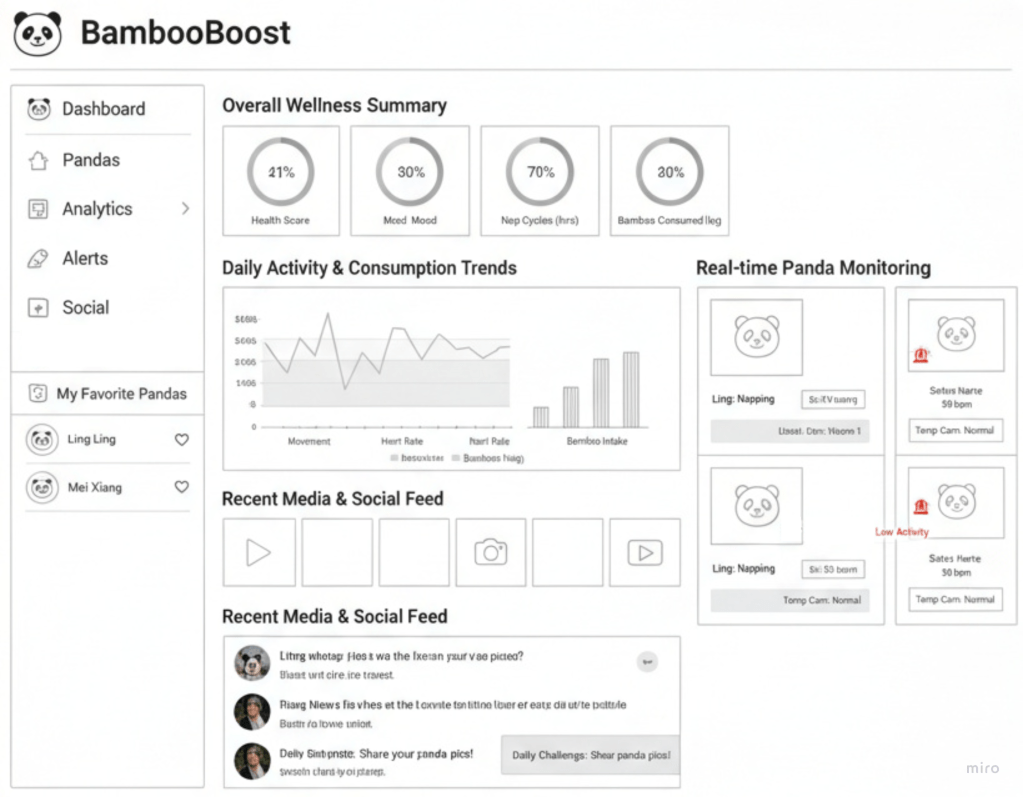
Turning this product idea into an executable plan requires transforming the vision into high-level product roadmap milestones with clearly set priorities.
For a brand-new product, establishing a clear first target is essential. This helps manage complexity and focus on the Minimum Viable Product (MVP) features, allowing us to deliver more amazing features as the product matures.
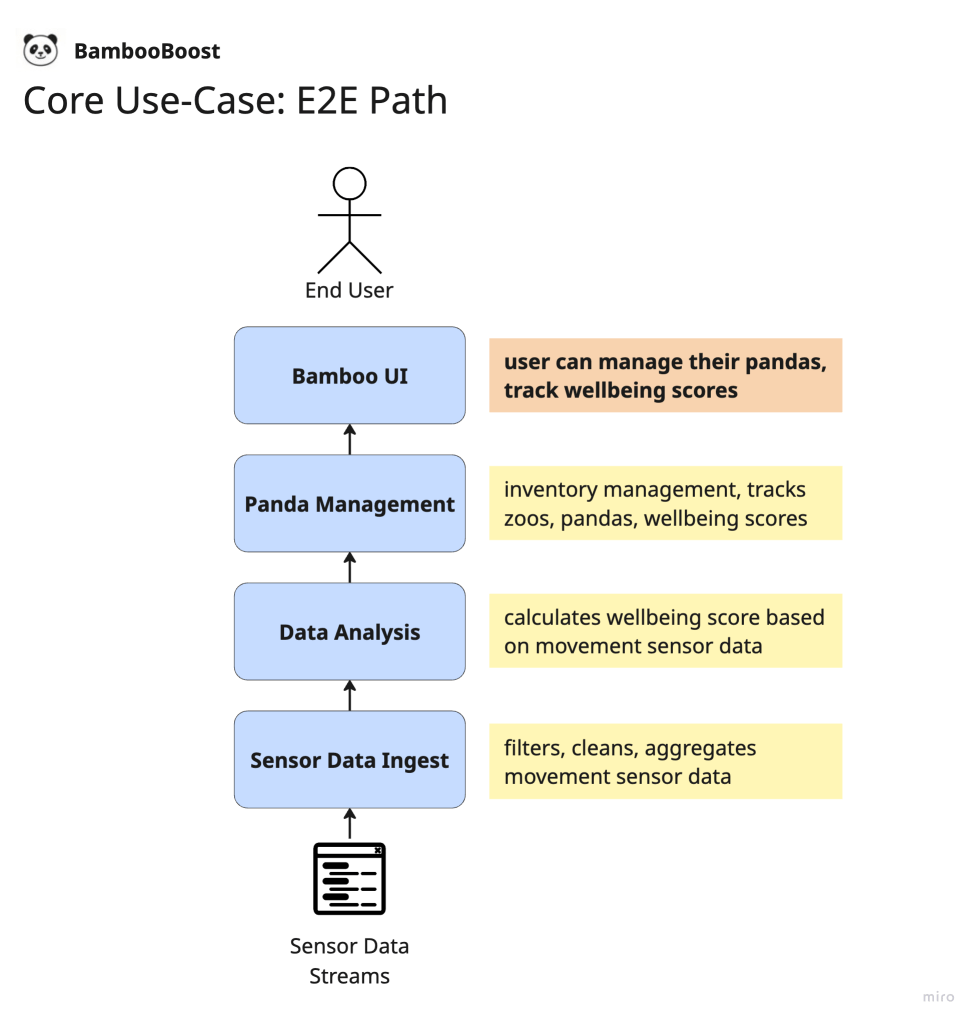
In the case of BambooBoost, the first core use case identified by product management is panda movement tracking based on sensory data. This will be the focus for the first release to early adopters. The solution must:
- Gather raw movement tracking sensor data from an external hardware provider.
- Process readings in real time (aggregation, cleaning, analysis, and calculation of a basic panda wellbeing score).
- Provide the first version of the web-based management system for zoo staff to track animals and their activity level.
Further product milestones – such as heart rate tracking, critical vital alerts, detailed sleep cycle analytics, and social media integration – are noted for the future but not refined now. By postponing non-essential features, prioritization ensures that limited resources are spent on features that deliver the highest value and have the greatest impact on core business goals. It is better to do one thing well than to add twenty underutilized, overcomplicated features.
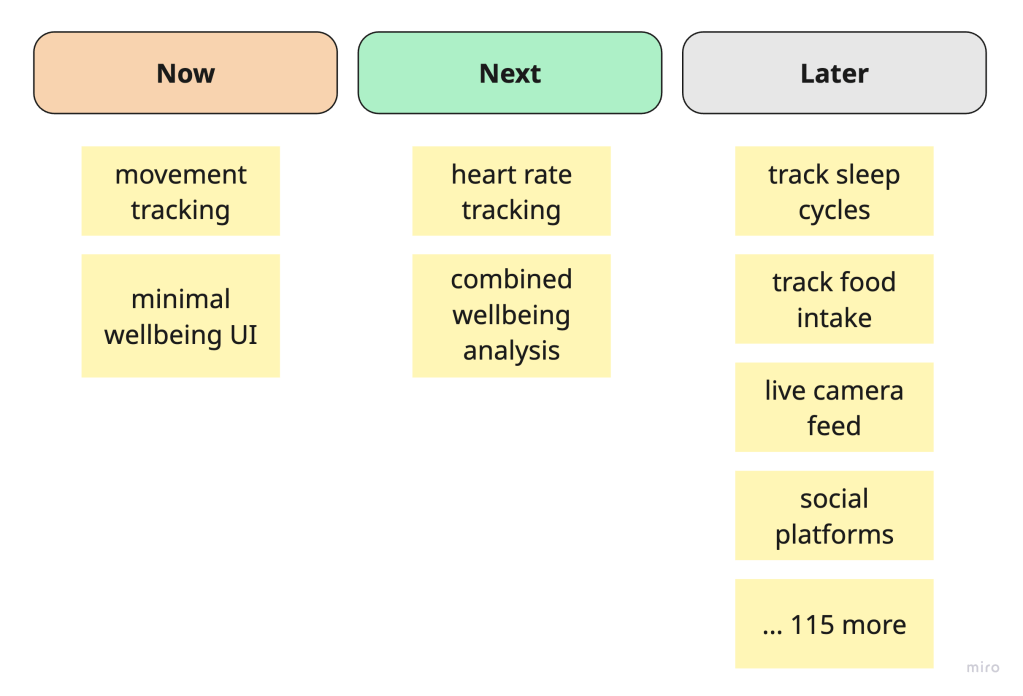
With the goal of delivering panda movement tracking established, now we need to refine it further.
Thinking in Evolving End-to-End Use Cases
Even the first core goal (movement tracking and the initial web management system) is too large to deliver in one go. We must define smaller, internally releasable milestones (iterations) to break the high-level goal into an actionable plan.
A key design decision for defining these iterations is the focus on constantly evolving end-to-end (E2E) use cases.
- Integrate Fast: First, integrate components as quickly as possible, even with very limited or almost no functionality. The goal is to establish an E2E flow that demonstrates potential end-user value.
- Improve Incrementally: Each follow-up iteration further improves the system and delivers more value to the end user.
Think of this as building a weak bridge and then making it stronger, rather than building complex, isolated parts that may not fit together in the end.
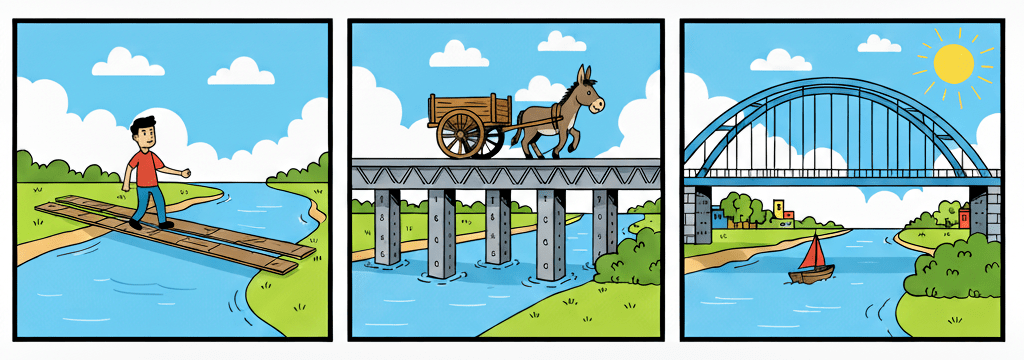
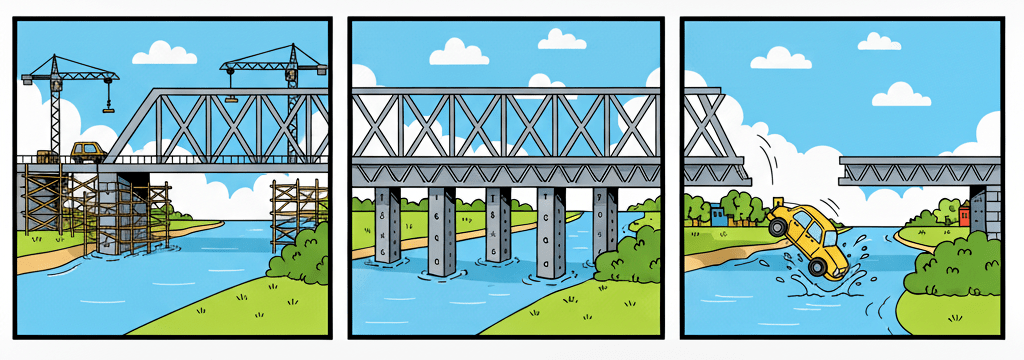
Early E2E integration provides the opportunity for fast end-user feedback, room for design/scope changes, and enables the development team to discover and tackle hidden complexities early on, avoiding massive delays and rework later.
Anti-Pattern (Technology Silos)
- Iteration 1: Sensor integration works perfectly.
- Iteration 2: Panda management database is finalized.
- …
- Iteration N: Put all of them together. Integration pain, late user feedback, costly changes.
Recommended Pattern (Evolving E2E)
- Iteration 1 (Walking Skeleton): A bare minimal E2E version that performs a small, meaningful slice of core functionality. Focus on connecting components. For example: one hardcoded business entity (“Demo Panda 123”), process a single dummy sensor reading, overly simplified wellbeing score calculation (100 if panda moves, 0 if not). Establishes the production-ready structure (architecture, CI/CD pipelines, observability) and “connects the dots”.
- Iteration 2 (MVP Singe Zoo): Processes sensor data of multiple pandas from the same location. Basic CRUD functionality in the management interface. Wellbeing tracking based on simple daily/hourly movement calculation
- Iteration 3 and Beyond: Support multiple zoos, allow users to configure sensor data sources, iterate on the UI/UX design, scale-up sensor and error-proof data processing (circuit breakers, multi-AZ deployment), and finally, add polish and “nice-to-have” features (search, reporting) for the public release.
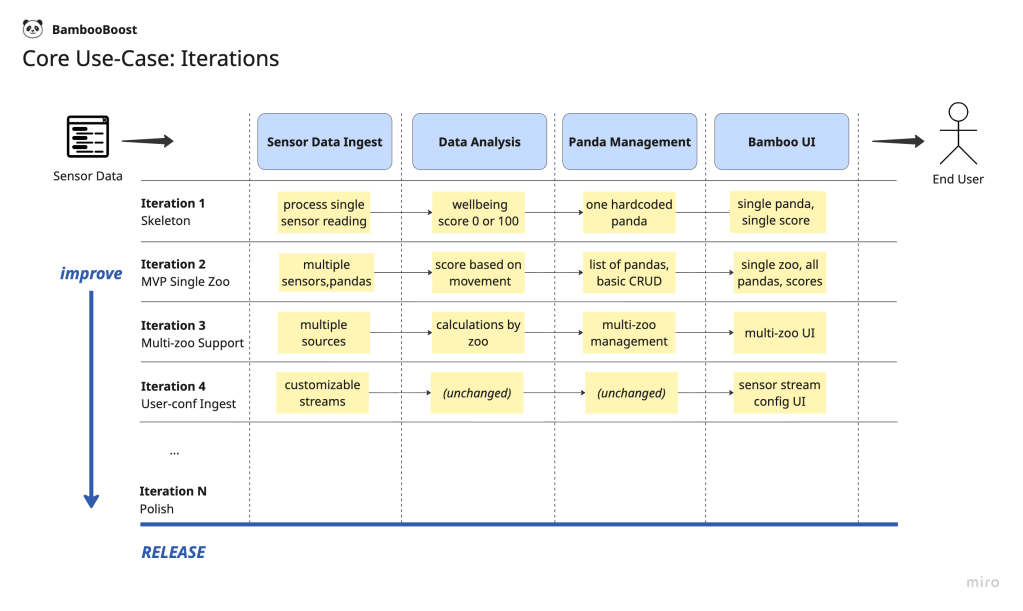
Each iteration improves the product E2E, has a clear goal, and provides a visible impact on the end-user experience.
User Stories as Small Verticals
To deliver a single iteration, its scope should be broken down into smaller user stories that implement a complete, end-to-end slice of functionality (a vertical slice). This means that the story cuts through all layers of the application – from the UI to the backend, database, and external integration points.
This approach ensures:
- Rapid, iterative delivery of working features.
- Focused development and testing with short feedback loops.
- Reduced risk of building layers that don’t align with final user needs or technical constraints.
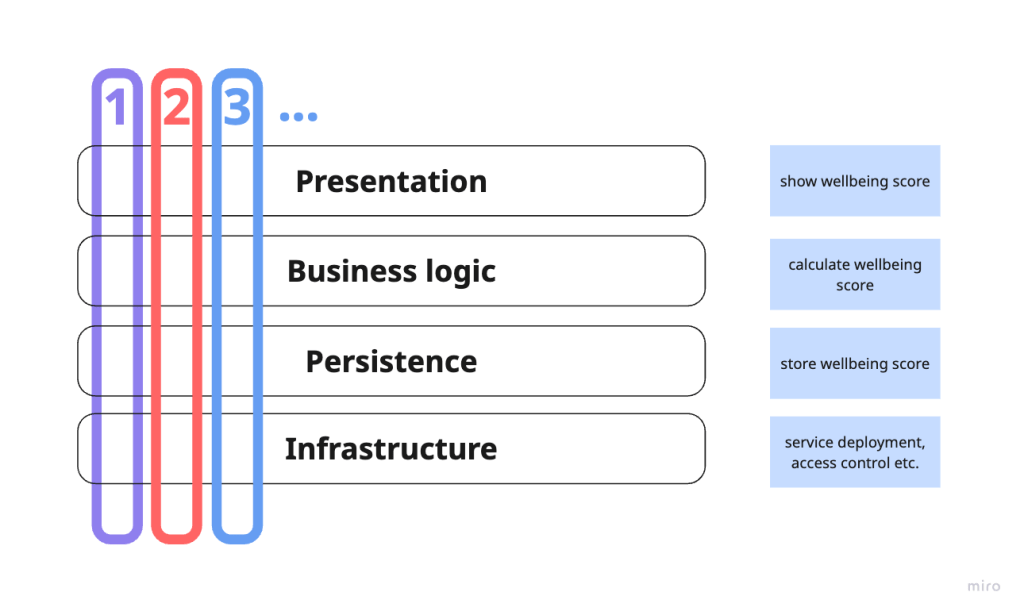
Example vertical: wellbeing score
Example: Panda List Interface (Bamboo UI)
The interface displays a list of pandas with basic information and wellbeing scores. It needs sorting, pagination, and filtering.
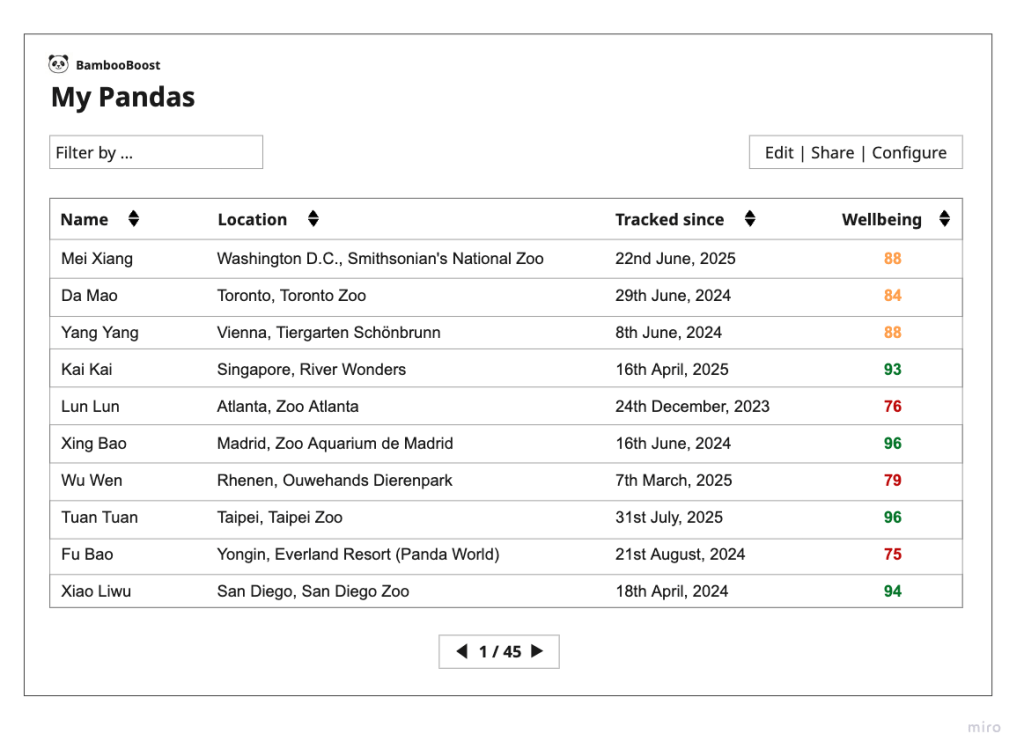
Anti-Pattern (Horizontal Slices)
- As a user I want a database table that stores pandas …
- As a user I want a REST endpoint that returns a sortable, pageable, filterable list…
- As a user I want to see a sortable, pageable, filterable list on the web interface…
- …
Recommended Pattern (Vertical Slices)
- As a user I want to see a single panda with limited information (name, age, location).
- As a user I want to see a list of pandas with limited information.
- As a user I want to see the wellbeing score on the list of pandas.
- As a user I want the panda list to be sortable and pageable.
- As a user I want to filter the list of pandas by criteria X, Y, Z …
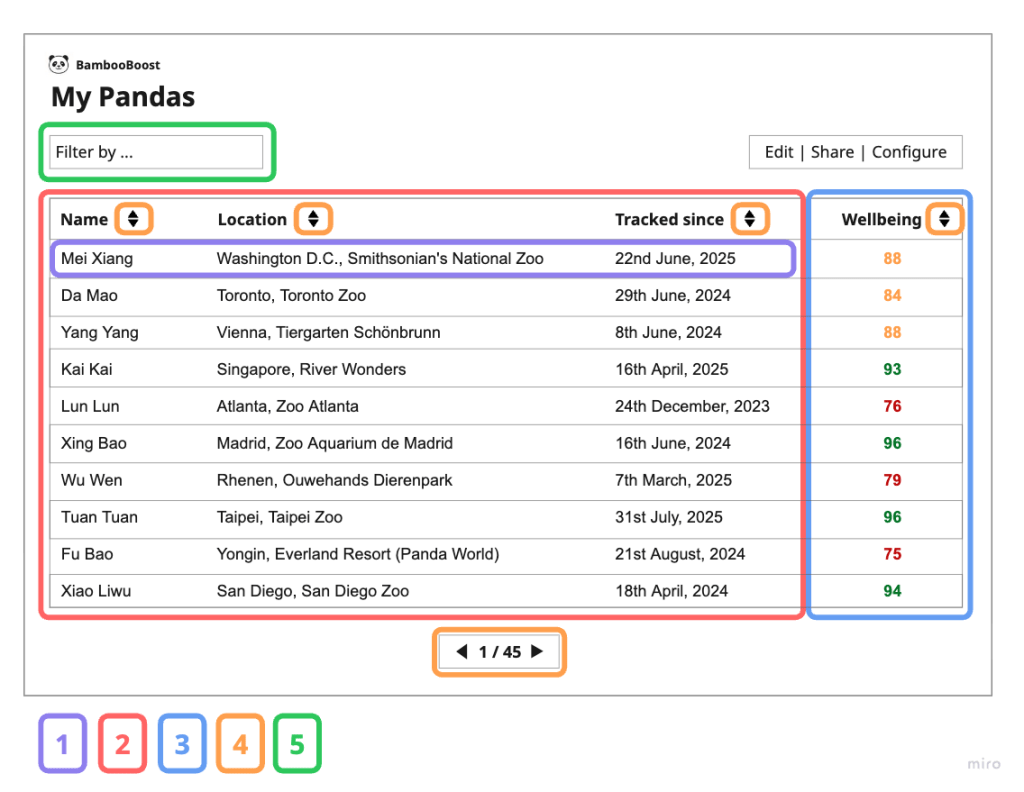
Each “vertical slice” story is E2E, adds a small but meaningful piece of functionality, and is ready for internal release and stakeholder feedback.
As an extra benefit, this agility also allows the team to react to priority changes faster. For example, if the bulk edit UI feature is dropped before starting the corresponding full-stack story, we can ensure that no wasted work has been done on the backend or database.
Demoability
Following the principles of E2E evolving use cases and small vertical slices naturally results in a demoable product. If a two-week sprint focuses on a small, meaningful change visible to the end user, we can actually demo that change. This approach avoids the awkward situation of trying to demo a database schema to zoologists, instead, we show them what they will see once the feature is released.
Key Demo Practices:
- Demo live. Whenever possible, run demos live in a test environment.
- Mock realism. Since we can’t have real pandas in the office, mock integrations with external providers, ideally by replaying real data or a well-known pattern.
- Define test scenarios. Prepare reproducible and relevant test scenarios. For instance, instead of showing a stream of random notifications, demonstrate a specific flow: “I cut sensor data from 5 test pandas, and now I am getting 5 alerts about missing vital readings.”
Example: As a user I want to see the wellbeing score on the list of pandas
What do demo:
- New design: the updated panda list including the new wellbeing score column.
- Live updates: feed the test environment with mock sensor data and show how the score updates in real time.
- Failure case: cut off the sensors for some test pandas and show how the wellbeing score immediately changes to “No data” on the UI.
These flows utilize the whole BambooBoost architecture (ingest → analysis → panda management → UI), perfectly matching the small vertical approach.
Well-prepped E2E live demos are crucial for early feedback, building stakeholder confidence, and ensuring you are building the right thing.
Anti-Patterns to Avoid
Following the iterative approach correctly helps avoid common development and planning pitfalls.
Backend Now, UI Later (Technology Silos)
- Problem: Non-technical stakeholders give late feedback on the UI, requiring expensive rework and context switching for the backend team. The frontend team struggles with an inflexible API.
- Solution: Work Together. The team works together on small, full-stack stories that are completed within one sprint.
Perfecting a Single Component in Isolation (Analysis Paralysis, Gold Plating)
- Problem: The team spends months experimenting and perfecting a complex algorithm (e.g., wellbeing score calculation based on all sensor data) before any product is released or tested with real data. Assumptions are likely to be wrong.
- Solution: Simplify. For the first iteration, simplify things as much as possible (e.g., wellbeing score is 100 if the panda moves, 0 if not). Finetune in every iteration based on real data and domain expert feedback.
Trying to Solve All Problems for the First Try (Premature Optimization)
- Problem: Questions like “What if sensors go through time zone changes?” or “How do we handle 100k sensors?” blow up the scope, delay the first release, and prevent feedback from real users.
- Solution: Do the Simplest Thing. Address necessary functionality first. Add future stories to properly discuss and implement edge cases or non-functional requirements when they become relevant.
Stakeholders Pushing for the “Fancy Stuff” (Scope Creep)
- Problem: Stakeholders push for advanced features (e.g., social media integration) before the basic foundation (e.g., basic panda management) is finished, frustrated by the team’s “slow” progress.
- Solution: Align and Communicate. Collaborate with all key stakeholders to align on priorities. Clearly communicate that prerequisite groundwork is unavoidable. Highlight these prerequisites on the roadmap.
All Features WIP, Nothing Is Done (Lack of Focus)
- Problem: The team jumps between features X, Y, and Z, preparing a lot of things but completing nothing. Nothing is release-ready.
- Solution: Finish What You Start. Put future-looking work (Y and Z) aside until it is relevant for the development team. Focus completely on completing the most important work item (X).
Conclusion
Iterative development is about more than breaking work into smaller pieces. It is about delivering meaningful, end-to-end functionality in each cycle, learning from real feedback, and steadily evolving toward the product vision.
By focusing on manageable iterations with short feedback cycles on all levels (product roadmap, internal milestones, user story breakdown) teams can avoid common pitfalls and ensure that every step brings them closer to building the right product. 🐼
 RND LNG